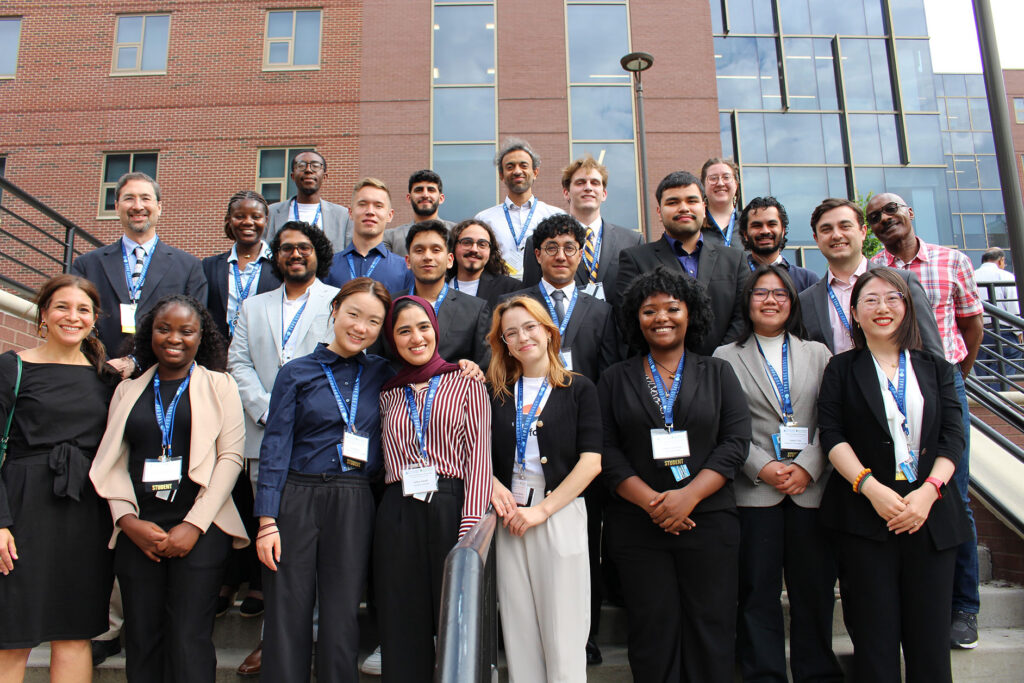
A contingent of students and faculty from the Tickle College of Engineering took part in the inaugural Fusion Innovation Bootcamp (FIB), a two-week entrepreneurship and innovation-focused training program, held at Tennessee State University (TSU) in June.
Organized as part of the IGNITE Fusion Energy program, FIB gave students the chance to engage with fusion industry professionals, national lab researchers, and university faculties through lectures, panels, hands-on sessions and pitch presentations. The effort is meant to help meet the education and hiring needs of the fusion industry over the next five years and prepare the next generation of researchers and technicians for careers in fusion engineering and technology.
TCE students Daniel Ocampo, Glory Ademola, and Ngoc (Ashton) Tran were among the 17 students from across the country selected to attend FIB. They received lectures on fusion technology, business management, public relations, public policy, regulatory frameworks, and multiple other topics relevant to working in the fusion industry.
“The bootcamp really opened my eyes to how important the business and supply chain aspects are to making big projects like fusion energy a reality,” Ocampo said. “I have only recently started researching fusion technology, but I think now is an exciting time to enter the field, given the rapid growth of the private sector. I am excited to see what the first few fusion companies build and deliver.”
Exploring new horizons
Ademola, a graduate research assistant in data science and engineering in the Bredesen Center, entered the FIB with no background in materials science, physics, or nuclear engineering. Her curiosity to explore unfamiliar domains motivated her to apply for the program.
“I came in knowing that fusion would be completely new to me, but I was excited by the opportunity to learn,” Ademola. “My goal was not to become a fusion expert in two weeks, but to understand the industry, the challenges it faces, and the many ways my expertise in artificial intelligence and computer vision could contribute to advancing fusion technologies. Overall, FIB exceeded my expectations.”

Tran, who also had no background in nuclear engineering or fusion, first learned about the program through a friend who is pursuing a PhD in nuclear engineering.
“I’m incredibly grateful that he encouraged me to apply. Even though the bootcamp lasted only two weeks, I learned so much not only about the science and engineering behind fusion, but also about the industry, and the people working to make fusion energy a reality,” Tran said. “One of the best parts of FIB was the community. The participants came from diverse cultures, academic disciplines, and professional backgrounds, which made every conversation interesting and inspiring.”
Building a future in fusion
David Donovan, a professor and Zinkle Fellow in the Department of Nuclear Engineering, is the University of Tennessee representative for the RENEW-IGNITE program that coordinated FIB.
“Our role at UT is to help develop course materials in fusion technology with other universities in Tennessee so that faculty can customize content for their courses and allow students to learn more about fusion technology,” said Donovan, who gave the opening technical lecture for the FIB and served as a mentor for the students.
Near the conclusion of the two weeks, the FIB students were divided into four teams to pitch an idea for a startup company in fusion technology to a panel of judges.
Ocampo was a member of the winning team, and Ademola was on the second-place team. Ocampo will present a poster on his project at the annual meeting of the APS Division of Plasma Physics in November in Chicago.
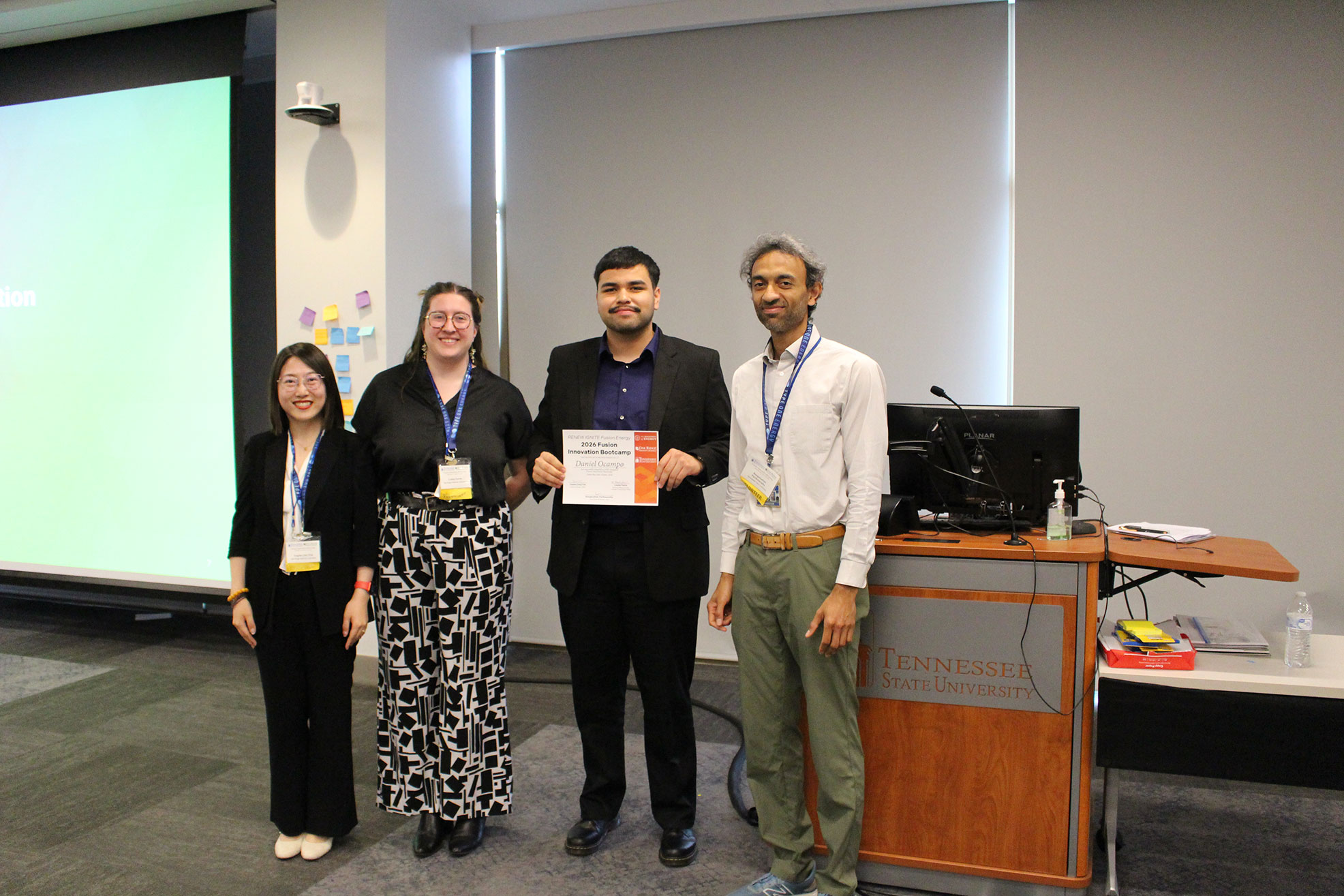
“I feel like everything came together perfectly for our team,” Ocampo said. “We pitched a business idea directly tied to my teammates’ and my PhD research: plasma-material interactions. It was a fun exercise to think beyond the science and figure out how we could turn plasma-facing components into a potentially profitable business. I was really proud of the work we did, and I was honored to take first place, given the other presentations I saw during the competition.”
Ademola was impressed by the diverse academic backgrounds of the students at FIB and how the program helped them identify the ways their unique expertise could contribute to fusion.
“That interdisciplinary environment reinforced the idea that the future fusion workforce must be diverse in both skills and perspectives, and that early-career professionals should be encouraged to see themselves as part of that future,” Ademola said. “Building the future fusion industry requires far more than just nuclear engineers, physicists, and materials scientists.”
Contact
Rhiannon Potkey ([email protected])